Most relocation guides ask you what you're looking for. A warm climate. Low cost of living. Good healthcare. They take your answers and match you against a list.
We think that misses something important.
The same city can be a dream destination for one family and a bad fit for another — not because their preferences are different, but because they are different. A couple where one partner is a Black woman and the other is a trans man isn't just looking for "affordable and warm." They're asking whether they'll be safe, accepted, and able to build a life without constant friction. That question deserves a real answer.
That's the problem we've been focused on. Here's what we've built.
The quiz now asks who you are before it asks what you want
We reorganized the entire quiz around a simple insight: your identity changes every score, but your budget only changes some of them.
Family composition, acceptance needs, and how important it is that your family blends in comfortably now come before anything else — before income, before housing plans, before climate preferences. We signal this visually too: identity questions use a different color accent than logistics questions, so you can see at a glance why we're asking.
This isn't just sequencing. When you tell us you have LGBTQ+ family members, or that racial inclusion matters to you, or that religious tolerance is a factor, we reweight the data that actually protects your family — not the aggregate safety scores that might obscure it. A city can have a low crime rate and still be a hostile place for your specific household. We try to surface that.
You get an archetype, not just a ranked list
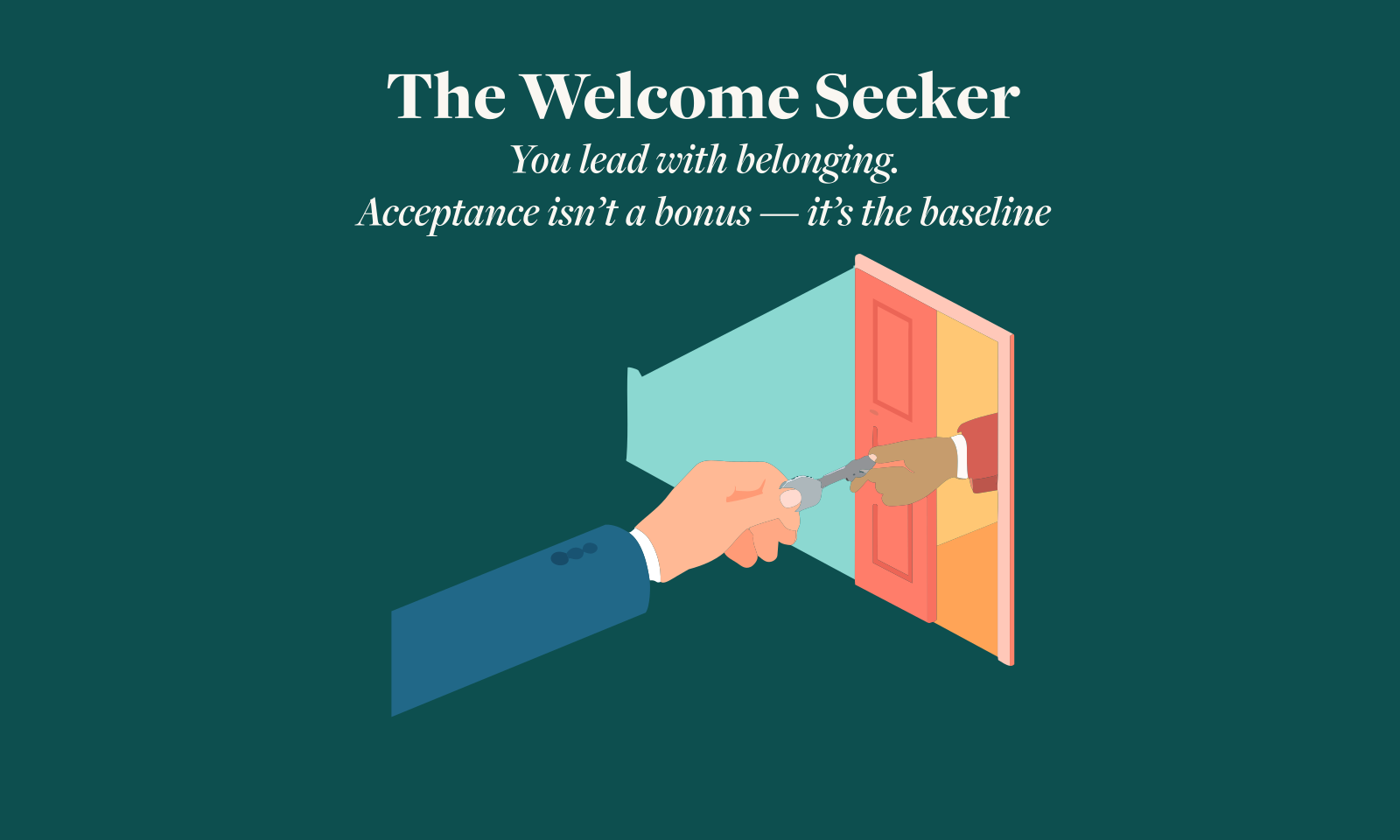
After scoring, we assign you one of ten relocation archetypes — The Welcome Seeker, The Value Scout, The Safety Nester, and others. This isn't a gimmick. The archetype reflects the specific combination of priorities that came out of your answers, and it frames why your top matches are your top matches.
It's the difference between "Portugal scored 84" and "You're a Remote Base Builder — you need fast internet, reasonable cost, and a welcoming expat community, and Portugal delivers all three." The number tells you the what. The archetype tells you the why.
Personalization that goes beyond "what's your budget"
Two other things we're proud of:
Home city as your baseline. Climate, cost of living, and timezone are all expressed relative to where you're coming from, not in absolute terms. If you're in Washington DC, we'll tell you Lisbon is cooler, gets less rain, and has more sunny days — not just that it has a Mediterranean climate. If you're in San Francisco, we'll show you what your budget actually buys in Medellín, rebased against what you're paying today.
Dealbreaker transparency. If you set a minimum threshold on safety or healthcare and a destination falls short, we flag it — we don't hide it or bury it in fine print. The report shows exactly which thresholds each destination passed and failed, with the scores side by side.
The report is built for the moment you're actually deciding
The paid report isn't a summary of your results. It's a decision tool.
The head-to-head comparison table puts your top three matches side by side across all eight facets, acceptance sub-scores, and cost versus your home city — so when you're down to Portugal vs. Mexico vs. Colombia, you can see exactly where each one wins and loses for your profile.
Visa pathways are broken out by type — digital nomad visa, retirement visa, investor visa, work permit, long-term residency — with a score for each. Because "easy to get a visa" means something completely different depending on whether you're a 32-year-old remote worker or a 58-year-old retiree.
And everything exports to a PDF you can share with a partner, a financial advisor, or just save for the moment you're ready to make the call.
Still early — but the foundation is right
The timezone scoring is a placeholder. The language data is rougher than we'd like. There are destinations we haven't added yet. But the foundation — a quiz that treats your identity as a first-class input, not an afterthought — is what we're building everything else on top of.


